



BOUNCE RATE EXPLAINED

WHAT IS BOUNCE RATE
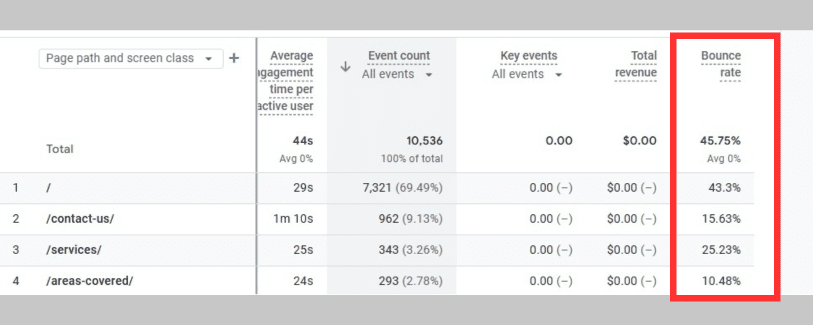
• Bounce Rate tracks the percentage of people on your website who never:
A. Filled in a form
B. Completed a purchase
C. Visited another page.
• Bounce Rate measures the effectiveness of your landing page and how well people interact with it.
• A high bounce rate indicates your landing page provides a poor user experience.
• A low Low-Bounce Rate means your landing page is meeting user expectations.

TYPES OF BOUNCE RATES

HIGH BOUNCE RATE

A high bounce rate indicates your landing page is not performing well.
If a Bounce Rate is between 55 and 70%, it means your landing page needs improvement.
If a Bounce Rate is between 70 and 100%, it means your landing page needs big improvement.

FACTORS THAT INCREASE BOUNCE RATE:
A. Slow Download Speeds
B. Poor Navigation and Design
C. Poor or Unmatching Content

LOW BOUNCE RATE
A low bounce rate means your website is performing well.
If a Bounce Rate is between 40 and 55%, it means your landing page is average and requires little improvement.
If a Bounce Rate is 25 and 40%, it means your landing page is performing exceedingly well.
FACTORS THAT DECREASE BOUNCE RATE:
A. Fast Loading Website.
B. Traditional Navigation and Smart Internal Linking.
C. High-Quality and Relevant Content.

FREQUENTLY ASKED QUESTIONS

Is a high Bounce Rate always bad?
Not always. Some pages with little content, like contact pages or blog articles, naturally get higher bounce rates. But if important pages have a high bounce rate, it usually means something needs improving.
How can I lower my Bounce Rate?
Make your page load faster, improve your content, use clearer headings, and make sure your page matches the user’s intent when they click.
Does Bounce Rate affect SEO?
Not directly, but user behaviour influences SEO overall. If people get frustrtaed and leave quickly, Google assumes the page may not match what they’re looking for.