


INTERNAL LINKS EXPLAINED

WHAT ARE INTERNAL LINKS
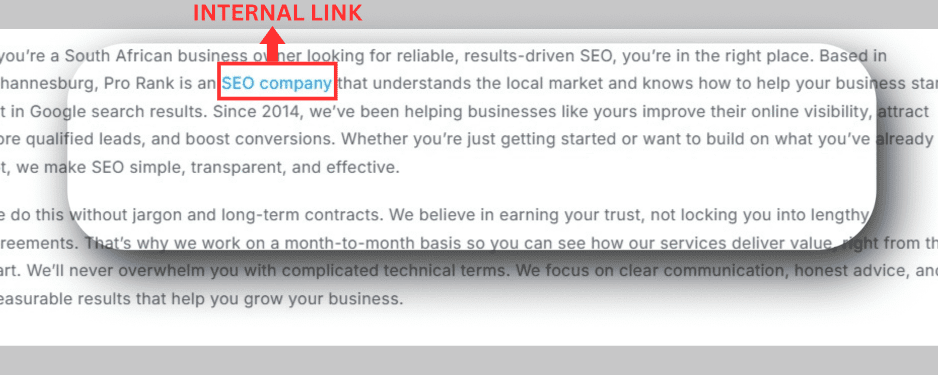
• Internal Links are hyperlinks on a website that lead to the other pages of the same website.
• Internal links are implemented to improve the users navigational experience.
• The text used in Internal Links are referred to as ‘anchor text’.
• The anchor text must be accurate and point to the relevant web page.

WHY INTERNAL LINKS ARE IMPORTANT

HELPS GOOGLE CRAWL

Google use digital spiders to crawl the Internet to index new websites and webpages.
Internal links helps spiders find the pages on your site assuring it will be indexed correctly.

PASSES LINK JUICE
The Home Page connects to all pages of a website and passes SEO link juice to those pages.
Linking to Any Internal pages of your website passes link juice to the page, promoting your SEO score.

IMPROVES NAVIGATION
Google examines the interaction between users and websites, with navigation playing a crucial role.
Internal links improves the navigation on your website and helps users find what they want quickly.

BOOSTS YOUR RANKINGS
A Smart Internal Linking structure will boost your organic rankings on Google.
If you use relevant keywords as your ‘anchor text’, it will promote the webpages SEO rankings.

FREQUENTLY ASKED QUESTIONS

Why are internal links important for SEO?
They help Google understand your site structure, distribute authority, and improve indexing.
Do internal links improve a websites rankings?
Yes! Strong internal linking helps important pages rank better (on search engines) by passing link equity.
Should internal links use keyword-rich anchor text?
Yes, descriptive anchors help Google understand what the linked page is about, be clear and don’t try manipulate or overuse keywords.
How many internal links should a page have?
There’s no fixed number, but include enough links to guide users and help search engines understand your content.
Do internal links help reduce bounce rate?
Yes, because they provide options for users to explore more pages on your site.